Lumbar Disc Replacement in Indianapolis
Replacing a worn lumbar disc with a mobile implant that preserves the spine’s natural motion — an alternative to fusion for the right patient. Dr. Gerlach performs disc replacement in both the neck and the low back.
Overview
When a lumbar disc wears out and becomes a persistent source of pain, the traditional surgical answer has been fusion — locking the two vertebrae together. Disc replacement takes a different approach: the damaged disc is removed and replaced with a mechanical implant that keeps the segment moving, much the way hip and knee replacements restored motion to worn joints.
Because the segment keeps moving, disc replacement may reduce the extra stress a fusion transfers to neighboring levels — one reason motion preservation matters to Dr. Gerlach’s approach. Fusion remains a proven, well-established operation, and for some spines it is the better choice; which one fits is an anatomy-specific decision made from your imaging.
How the implant works
Ball-and-socket design
Two metal endplates anchor to the vertebrae with a durable polyethylene bearing between them — the same joint-replacement concept used in hips for decades, with this disc design in clinical use since 1990.
Built to stay put
A central keel and textured, titanium-coated surfaces give the implant immediate grip, and bone grows onto it over time for lasting fixation.
Sized to your anatomy
Implants come in multiple footprints, heights, and lordotic angles — matched to your spine on imaging, consistent with Dr. Gerlach’s alignment-aware planning.
Implant details describe the prodisc L lumbar disc replacement (Centinel Spine), per the manufacturer’s published specifications.
Fusion vs. disc replacement — see the difference
Both operations remove the worn disc. What happens to the segment afterward — and how the surgeon gets there — is where they part ways. Toggle to compare:
Choose an operation to compare
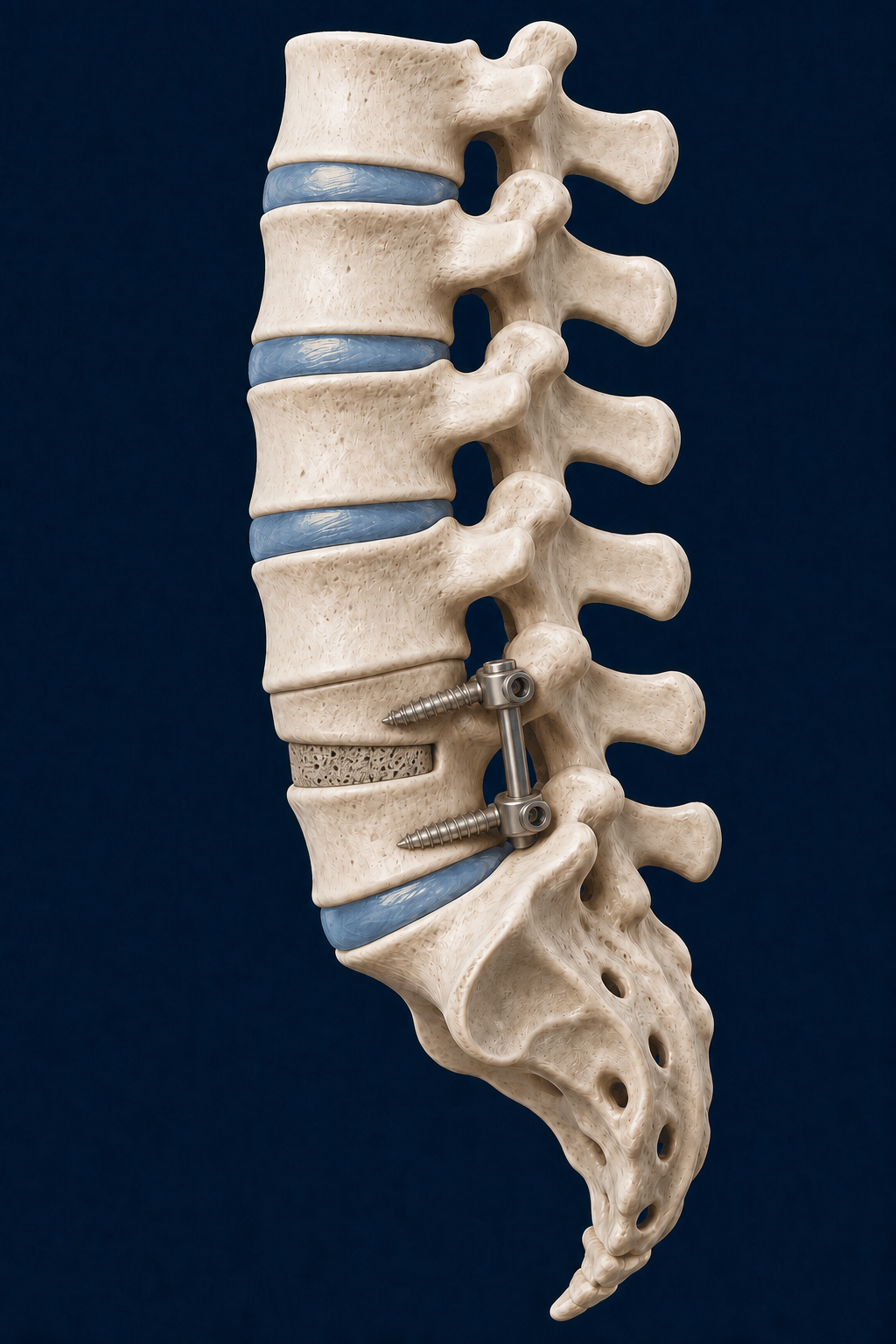
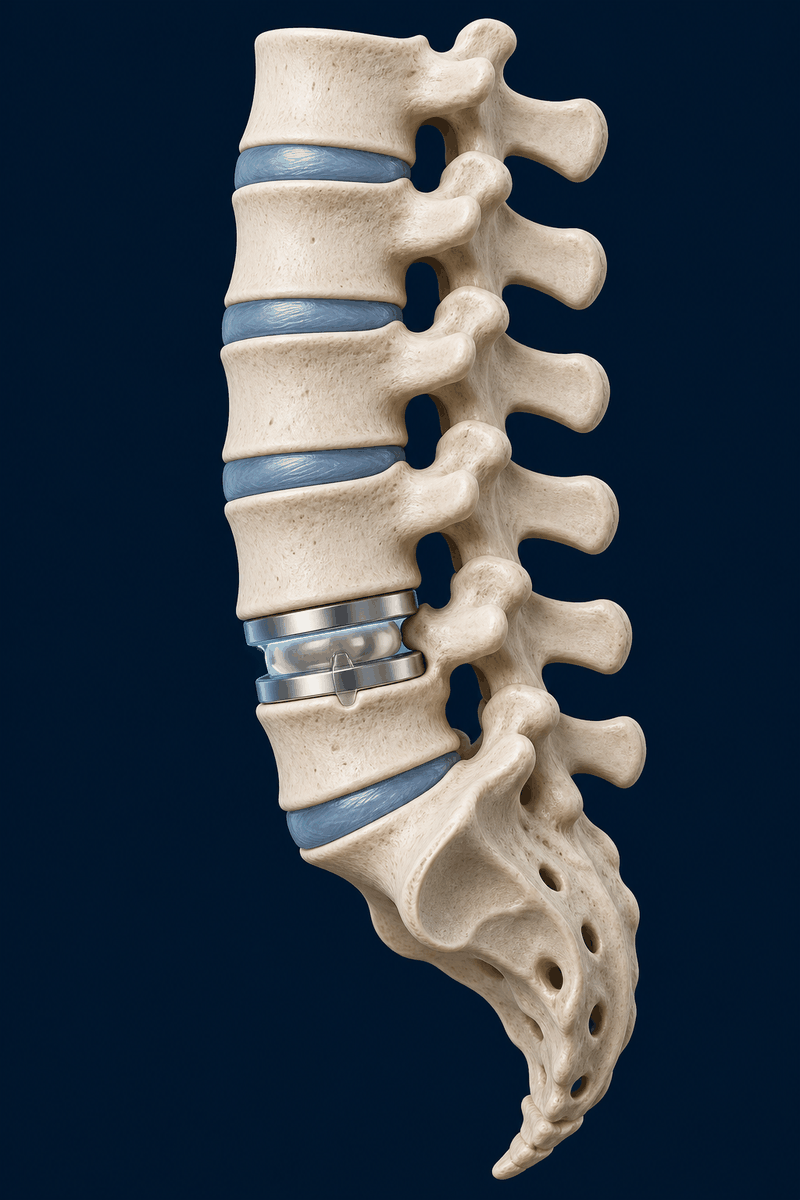
Typical patterns — the right choice is anatomy-specific and made from your imaging. Ask which fits yours →
The procedure
Lumbar disc replacement is performed through a small incision at the front of the abdomen — a mini-open anterior approach that reaches the spine without cutting through the back muscles. The worn disc is removed, the space is restored to its natural height, and the implant is sized, trialed, and seated in a stepwise technique. Most patients are walking the same day, and because the back muscles are spared, early recovery is often faster than after fusion.
Is it right for me?
Candidacy is specific. Lumbar disc replacement is typically considered for one or two worn discs causing persistent low-back pain after a full trial of non-surgical care — in a spine that is otherwise stable, without significant arthritis of the facet joints, deformity, or weakened bone. That determination comes from a careful review of your imaging and exam, not from a website. If disc replacement isn’t the right fit, Dr. Gerlach will say so and explain what is.
Frequently Asked Questions
Disc replacement or fusion — which is better?
Neither is better for everyone. Replacement preserves motion and may spare neighboring discs extra stress; fusion is a proven answer when stability is the priority or the anatomy doesn’t suit an implant. The right choice is made from your imaging, your symptoms, and your goals — together.
How long does the implant last?
These implants are designed for long-term use, borrowing bearing technology from decades of joint replacement. Like any implant, it is followed over time with periodic imaging.
What is recovery like?
Most patients are up walking the day of surgery, and because the approach spares the back muscles, early recovery is often quicker than fusion — with a gradual, structured return to full activity guided by your follow-up visits. Timelines vary person to person.
Wondering if your disc could be replaced instead of fused?
An imaging review answers it — honestly, either way.